
Levi Strauss and Jacob Davis: How a Customer’s Fix Became a Product Category
Davis identified a product failure; Strauss brought supply and distribution capabilities that helped the solution scale.
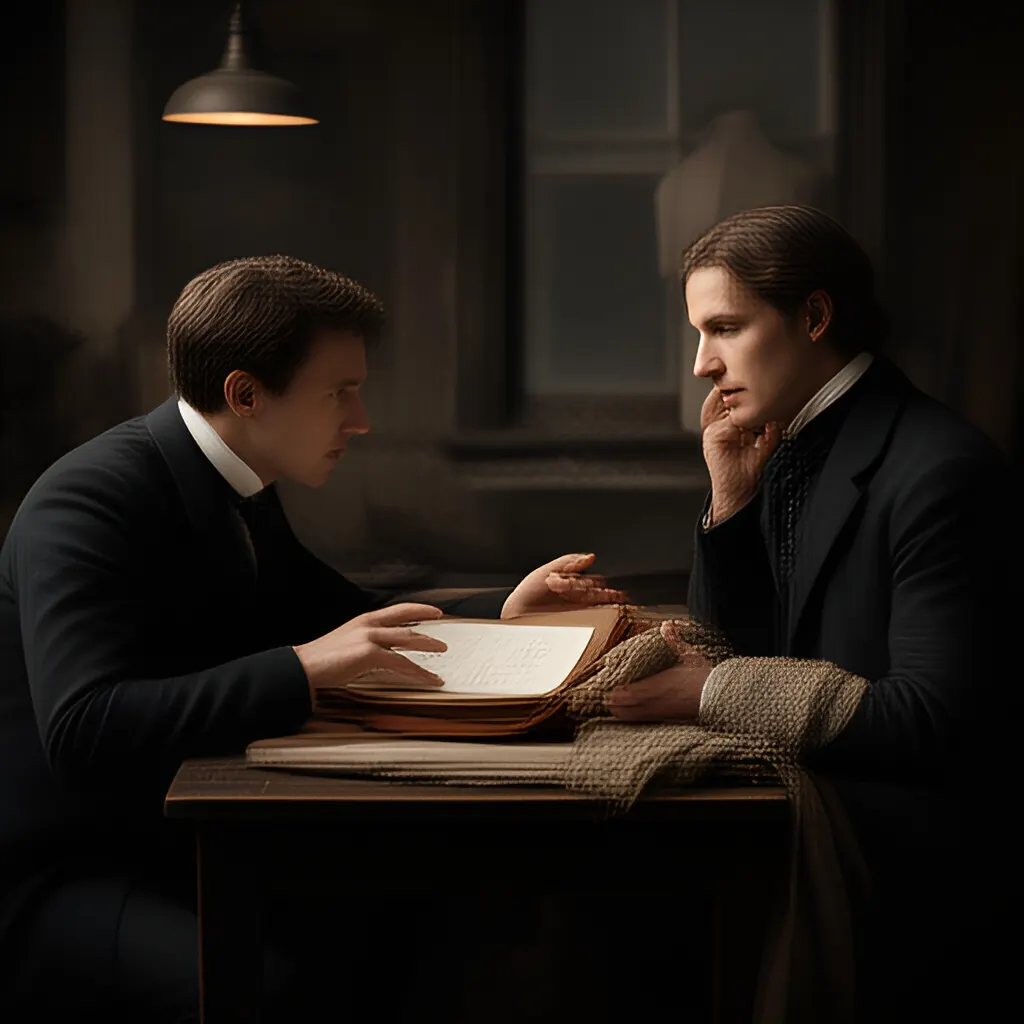
The riveted-trouser story shows how a customer problem became a business through complementary invention and commercial infrastructure.
In short
- • The patent formalised an improvement, but manufacturing, distribution and enforcement still had to be built.
- • The case challenges the lone-founder myth: complementary capabilities can matter more than a single heroic idea.
- • A patent protects a defined claim; it does not prove demand or create a complete business model.
The short answer
The riveted-trouser story shows how a customer problem became a business through complementary invention and commercial infrastructure.
Levi Strauss and Jacob Davis: Why the Best Product Story Has Two Founders
The small failure that revealed a product opportunity
The familiar origin of riveted work trousers begins with a practical complaint: pockets and seams on a labourer’s trousers tore under strain. Jacob Davis, a tailor working in Reno, Nevada, experimented with metal rivets at stress points. He had a useful product improvement but needed a commercial partner to help protect and scale it. Levi Strauss, a San Francisco dry-goods merchant who supplied fabric and served a network of retailers, brought a different capability. Together they patented the riveted-trouser design in 1873.
The U.S. National Archives preserves records associated with Davis’s patent and later litigation. The Smithsonian National Museum of American History documents an early pair of riveted trousers, while Levi Strauss & Co.’s own history describes the partnership. These sources support the broad sequence, although the company’s retrospective account should be read alongside independent archival material.
The business lesson is more interesting than a simple “listen to customers” slogan. The invention was not only a clever fastening. It was a complementary partnership between someone who saw a recurring product failure and someone who had access to supply, wholesale relationships and the means to commercialise it.
The workaround was evidence - but not the whole market
A customer complaint becomes commercially useful when it reveals a recurring problem with consequences people care about. Torn workwear created inconvenience and replacement costs. Rivets reinforced areas of strain. The improvement was specific, observable and tied to a use case: clothing that had to survive hard physical work.
But a workaround does not automatically prove a large market. A founder still needs to determine how often the problem occurs, who experiences it, what alternatives exist, whether the fix lasts and whether the economics work at production scale. Davis’s local tailoring experience helped identify the failure mode. The partnership made it possible to test whether the solution could travel beyond one customer.
This is a useful product-discovery principle: look for repeated effort customers already expend to compensate for a product’s weakness. They may repair it, combine it with another product, invent a manual workaround or repeatedly complain about the same failure. Such behaviour is often stronger evidence than a hypothetical answer to “Would you buy this?” It still needs validation, but it points to a problem already imposing a cost.
Complementary capabilities beat the lone-genius myth
Davis’s contribution was practical invention and knowledge of how garments failed in use. Strauss’s contribution was commercial infrastructure and a supply relationship. The patent formalised the shared invention, and their division of labour allowed production and distribution to expand. The company’s own history says Strauss was not a trouser manufacturer before the partnership; he was a merchant who understood sourcing and customers.
This is a classic entrepreneurial pairing: one person sees a product-level problem, another understands how to reach a market. The same pattern appears when an engineer partners with a salesperson, a domain expert partners with an operator, or a founder with deep customer knowledge works with someone who can build a scalable delivery system.
The risk is that founder mythology often compresses complementary work into one hero narrative. That makes a good story but teaches poor lessons about company building. Commercial success usually requires capabilities that no single person possesses. The important question is not “Who was the genius?” but “Which capabilities had to come together, and how were incentives and ownership arranged so the work could continue?”
A patent is a tool, not a business model
The 1873 patent gave the partners a legal claim over a defined improvement. Archival records also show that they later pursued an infringement case. That is a reminder that intellectual property is an instrument with boundaries, enforcement costs and a need for commercial follow-through. A patent does not manufacture a product, guarantee customer demand or build a distribution network.
Founders sometimes treat intellectual property as the entire moat. In reality, its value depends on what it protects, how easily competitors can work around it, the cost of enforcement and the company’s ability to deliver a better customer outcome. Brand, manufacturing quality, distribution, reliability and accumulated know-how may become just as important.
The riveted-trouser story also demonstrates that product categories evolve beyond the initial invention. Work trousers existed before the patent. The rivet addressed a particular weakness in that existing category. Over time, manufacturing, materials, fit, brand and culture changed what the garment meant. A company should distinguish the initial technical improvement from the long commercial and cultural history that followed.
From utility to identity
The original customer problem was durability. The later cultural status of denim cannot be projected backward onto the first work garments as if it had been inevitable. A product can move through different meanings as its users, contexts and distribution change. Workwear may become casual clothing; a specialist tool may become a lifestyle object; a utilitarian service may become a marker of professional identity.
That evolution creates both opportunity and risk. Brand meaning can raise willingness to pay, but a company that focuses only on symbolic value may neglect the functional reason customers trusted the product in the first place. For a durable-goods business, quality failures can damage a reputation built over generations. For a modern startup, a strong community or aesthetic should reinforce the product’s utility rather than replace it.
What the archival record teaches about storytelling
The National Archives’ account includes details from Davis’s deposition and patent litigation, which give the story more evidentiary grounding than a repeated internet anecdote. The Smithsonian’s object record provides material evidence of early riveted trousers. Corporate history adds the company’s account of production and development. Each source has a different role: patent records establish legal events, museum collections describe artefacts, and company histories explain institutional continuity.
A careful writer should not use a source to support more than it can prove. A patent establishes that a claim was granted; it does not independently prove every later claim about consumer adoption. A surviving garment reveals construction and labelling; it does not alone measure the size of the market. The distinction between evidence and interpretation is part of the story, not a footnote.
A founder’s product-and-partnership test
Use this case to examine a problem in your own business:
- Failure mode: What breaks, gets repeated, or forces customers into a workaround?
- Frequency: How often does it happen, and for which customer segment?
- Consequence: What time, money, risk or frustration does it create?
- Solution: Does the fix remove the root cause or merely hide a symptom?
- Complementary capability: Who has the missing skill, supply access, distribution or credibility?
- Defensibility: What protects the advantage after competitors notice it?
- Scale: Can the product be made, delivered and supported consistently?
- Ownership: Are contributions, decision rights and returns clear before the venture succeeds?
A useful experiment is to collect examples of the same failure from different customers, build the smallest credible fix, and test it under real conditions. If the improvement is valued but hard to manufacture, the next task is process design. If it works technically but customers do not pay, the issue may be the segment or economics. Each result should lead to a different decision.
The unique lesson
Levi Strauss and Jacob Davis demonstrate why the most valuable product stories often involve more than the person whose name became famous. Davis identified and engineered a solution to a concrete failure. Strauss brought commercial infrastructure that helped the idea travel. The patent formalised their collaboration, while production and distribution turned an improvement into a business.
For founders, the durable lesson is to take customer workarounds seriously, pair product insight with the capabilities needed to commercialise it, and resist the urge to turn every successful company into a one-person legend. A business becomes stronger when it can explain not only what was invented, but how the invention reached people who needed it.
The overlooked commercial work after invention
The patent story can make the business sound complete at the moment the idea is protected. In reality, the partners still had to produce trousers consistently, source materials, explain the product, serve retailers and respond to infringement. A patent grants a defined legal right; it does not create the operational capability to deliver at scale. The National Archives’ record of the later infringement suit is a useful reminder that enforcement itself takes time and money and does not necessarily deliver the remedy a claimant originally seeks.
This distinction helps founders avoid overinvesting in the idea while underinvesting in execution. A patent, prototype or product launch is a milestone, not the finish line. Ask what has to be true for a customer to receive the promised benefit every time and what capabilities must exist for the company to repeat that outcome.
A partnership pre-mortem
Imagine that a promising product partnership fails two years after launch. Write down likely causes: unclear ownership, unequal effort, disagreement over product direction, poor manufacturing, channel conflict, insufficient capital or disputes about the value of each contribution. For each risk, define a rule before the partnership is under pressure. Document intellectual-property ownership, decision rights, expenses, responsibilities, exit terms and what happens if one partner stops contributing.
Then run a separate commercial pre-mortem. What if the product is copied? What if demand exceeds capacity? What if customers like the improvement but will not pay a premium? What if a larger partner controls the channel? These questions turn an invention into a business plan. The lesson from Strauss and Davis is that complementary capability creates opportunity, but agreements and operating discipline help preserve it.
How to turn a small fix into a durable advantage
A product improvement becomes defensible when the company can repeat it, deliver it consistently and make it easy for customers to recognise its value. The initial rivet was a specific technical improvement; the long-term business required materials, production knowledge, distribution and a brand associated with durability. The distinction matters because competitors can often imitate a visible feature more easily than they can reproduce a whole operating system.
Founders should map the sources of advantage separately. Is the design protected? Is the manufacturing process difficult to reproduce? Does the company have unique customer insight? Is distribution more efficient? Does the brand reduce perceived risk? Each source can strengthen the others, but each also has a different maintenance cost.
A good strategy avoids relying on one fragile moat. It invests in the capabilities that customers continue to value and monitors when a once-unique feature becomes a category standard. The product should keep solving the customer’s underlying problem even as the market catches up.
A useful counterfactual
If Davis had possessed only the invention but no commercial partner, the idea might have remained a local tailoring solution. If Strauss had possessed distribution but no product improvement, he would have had no distinctive reason to build a new category. The partnership mattered because the capabilities were complementary. Founders should look for the missing capability that turns a good idea into a repeatable business, not assume they must personally master every part of the chain.
*
Sources and further reading
- Our Story - Our Story - Levi Strauss & Co.
- Patent No. 139,121 - Patent No. 139,121 - Google Patents / U.S. patent record
- Forever in Blue Jeans…and in Court - Archival context for Davis's 1873 patent and subsequent infringement litigation.
Editorial status: private research draft. The featured photograph is a real-photo candidate, but direct-file availability, rights, credit requirements, and a second distinct article image must be verified before publication. No interviews or private founder experiences are claimed.*
Related SOE knowledge
Take it into your work
Do something with what you just read.
Save it for later, mark the passage that matters, or open your SOE workspace and keep thinking.
Takeaways
What to carry forward
- → Look for repeated customer workarounds, pair the missing capabilities, and define ownership and operating responsibilities early.
- → Separate documented facts from interpretation and preserve the limits of the available evidence.
- → Use the case as a decision aid, not as a universal formula.
Look for repeated customer workarounds, pair the missing capabilities, and define ownership and operating responsibilities early.