
Giving Hard Feedback
Giving feedback is a kindness. The unkindness is the silence before it. Learn to have the conversation before the problem compounds.
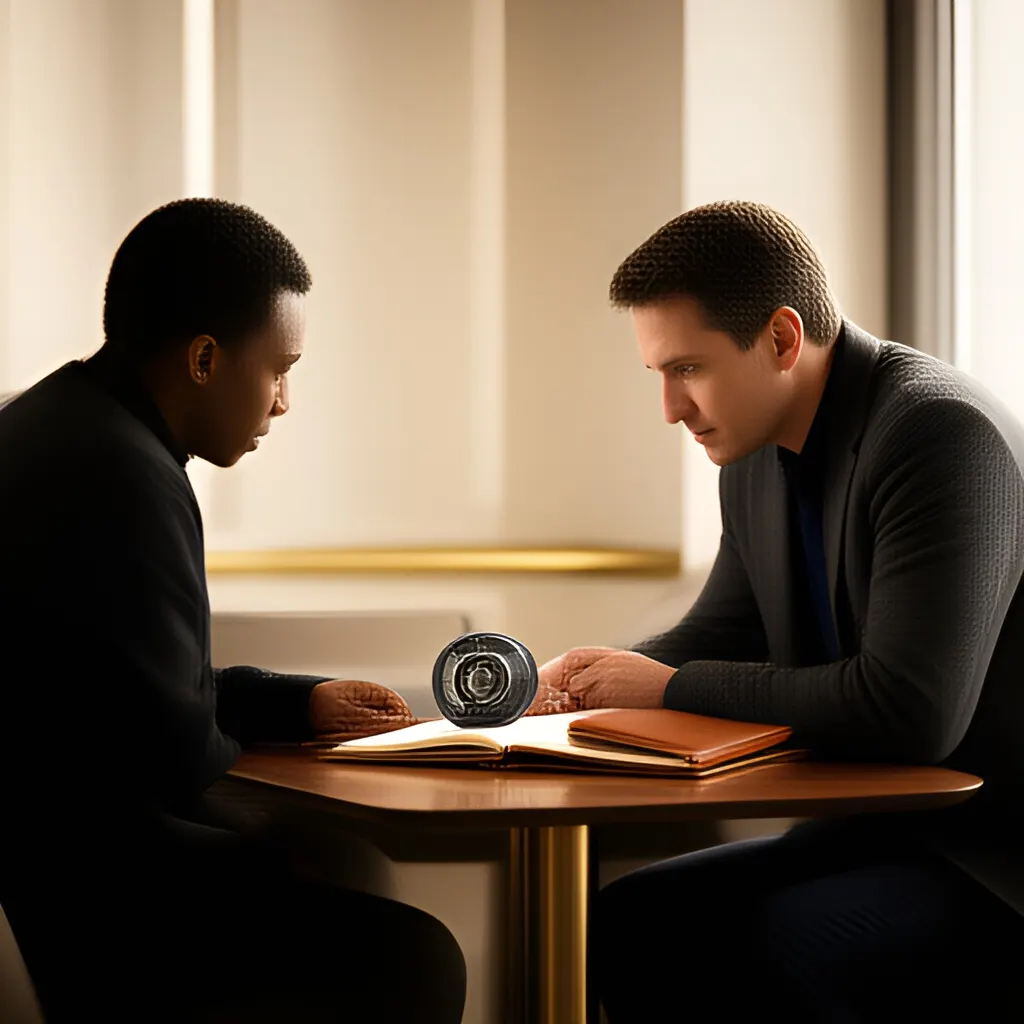
Giving feedback is a kindness. The unkindness is the silence before it. The founders who avoid difficult conversations do not protect their team. They protect themselves from discomfort, and the team pays the price in confusion, resentment, and eventually departure.
In short
- • Why delaying feedback makes it harder for everyone
- • The structure of a feedback conversation that preserves trust
- • How to give feedback without making it personal
- • Receiving feedback as a founder
Start with what is working
The mistake most founders make when giving feedback is starting with the problem. They say: here is what went wrong, here is what you need to change. The person hears: you are not good enough. The conversation ends before it begins. The conversation that actually works starts with what is working. It says: you did this well, and because you did that well, I believe you can handle this too. That framing changes everything.
This is not about being nice. It is about being strategic. The person who hears that their work is valued before they hear the hard part is much more likely to engage with the hard part. They are not defending themselves against an attack. They are receiving information that helps them. The relationship between the feedback and the relationship is not a trade-off. It is the same thing.
A study from Harvard Business Review confirmed this across twelve thousand employee surveys: the quality of feedback delivery matters more than the feedback content. The same critical message delivered with warmth produced sustained behaviour change in eighty percent of recipients. Delivered with indifference or criticism, the same message produced no change in seventy percent of recipients. How you deliver feedback changes what happens after you leave the room.
The specific feedback formula
Good feedback is specific. It names the behaviour, not the person. It says: when you did X, the result was Y. It does not say: you are X. The difference between these two forms is not subtle. One invites a conversation. The other invites a fight. The founders who give feedback well are the ones who have learned to stay at the level of behaviour.
Good feedback is also timely. It does not wait for the quarterly review. It happens within days, sometimes hours, of the moment. The person who just gave a poor client presentation needs to hear about it before they give the next one, not three months later when it is too late to change. Timeliness is kindness.
Good feedback is balanced. Not in the sandwich sense of compliment-criticism-compliment, which people have learned to see through. Balanced in the sense that the person can see the full picture: where they are strong, where they need to grow, and why you believe they can grow there. That last part is essential. Without belief, feedback is just judgment.
Create conditions for receiving feedback
The people who receive feedback well are the ones who have been invited to give it first. The founders who ask their team for honest feedback create a culture where feedback is normal, not an event. The people who are used to giving feedback are much better at receiving it when the roles are reversed.
This means your team meeting should include a moment where you ask for feedback on you. Not a vague is there anything. A specific: what is one thing I could have done better this week. You will be surprised how quickly the culture shifts when the most senior person in the room asks this question genuinely, every single week.
The founders who do this consistently are the ones who model the behaviour the team will follow. When you show that you can hear hard things without defensiveness, the team learns that hard things can be said. When you show that you cannot, the team learns to stay quiet, and the problems accumulate until they become visible in the results.
When feedback does not land
There will be people who cannot hear feedback well, no matter how well you deliver it. This is not a failure of the feedback. It is a signal about whether that person can grow in the role they are in. The founders who distinguish between a delivery problem and a capability problem are the ones who avoid wasting time on conversations that were never going to work.
The test is simple: give the feedback, give it well, and watch what happens next. If the person engages, asks questions, and shows up differently in the following weeks, the delivery was the problem. If the person defends, deflects, and repeats the same behaviour, the capability is the problem. These are different problems with different solutions. The founders who confuse them make the wrong next decision.
When capability is the problem, the conversation shifts from feedback to a different question: is there a different role where this person can succeed? The founders who have honest conversations about fit are the ones who keep good people who are in the wrong role, instead of losing them because the conversation never happened.
Building a feedback culture
A feedback culture is not built through a training programme. It is built through repetition. Every team meeting. Every one-on-one. Every project post-mortem. Feedback becomes normal when it happens all the time, not when it is announced as an initiative. The founders who are consistent about it build teams that are honest with each other. The founders who are inconsistent build teams that have learned to say the thing the founder wants to hear.
The rhythm of feedback matters. Weekly check-ins with each person. Monthly team conversations where feedback is part of the agenda. Quarterly honest conversations about how the team is doing and what needs to change. Annual reviews that summarise what has been said all year, not announce things that have never been said before.
The founders who build this rhythm are the ones who are not afraid of hard conversations. They know that the hard conversation now prevents a crisis later. They know that the person who receives feedback well is a person who is growing, and a growing person is a valuable person. The founders who avoid feedback do not have a high-performing team. They have a team that has learned to manage the founder's anxiety instead of managing the work.
Research and evidence
Harvard Business Review — The Right Way to Handle Decision Rights. Decision ownership works better when the decision itself is clearly defined first. Harvard Business Review — High-Performing Teams Need Psychological Safety. Psychological safety helps teams surface problems and disagreement.
Evidence boundary: These sources support the underlying principles and context; they do not prove that one universal tactic works for every founder, market or company. SOE separates source evidence from editorial synthesis.
Take it into your work
Do something with what you just read.
Save it for later, mark the passage that matters, or open your SOE workspace and keep thinking.
Takeaways
What to carry forward
- → Feedback given early is kindness. Feedback given late is damage control.
- → Describe the behaviour, not the person.
- → Ask before you tell. The best feedback conversations are two-way.
- → Your reaction to feedback teaches the team how to receive it.
Feedback is not a performance event. It is a relationship practice. Give it well, receive it well, and build a team that is honest with each other every single day. The founders who do this will always outperform the ones who avoid it.